kalvin0x58c

Hi! I'm Kalvin, and I am an IT student and a disability and humane-tech activist.

https://newo.ai/wp-content/uploads/2025/12/1-AI-Powered-Answering-Services_-Revolutionizing-Business-Communication-in-2025.jpg

  • The author, a neurodivergent student, uses AI as a 'digital prosthetic' to bridge the gap between chaotic thoughts and coherent expression, not as a mindless 'slot machine'.
  • Criticism of AI use from a fellow disabled person is identified as 'lateral violence,' where oppressed groups turn frustration on each other rather than systemic issues.
  • The author differentiates between 'Macro-Economics' (criticizing AI providers like OpenAI) and 'Micro-Utility' (focusing on the practical application of AI tools for personal problem-solving).
  • The author asserts 'Digital Sovereignty,' the ability to extract utility from AI tools while rejecting the ideology of their owners, citing the example of using Elon Musk's Grok while disagreeing with him.
  • The criticism of AI is compared to historical reactions against new technologies like the camera, suggesting a recurring pattern of fear and resistance to technological shifts.
  • Information Literacy, defined as the efficient filtering, verification, and application of information, is presented as a crucial survival skill in the Information Age.
  • The author rejects labels like 'Pro-AI' and 'Anti-AI,' advocating for a third option: the autonomy to define and choose one's own tools based on personal needs.
  • The author's activism is framed as a 'protocol for autonomy,' emphasizing the right to choose whether or not to use AI without fear of judgment or harassment.
  • AI models are trained on publicly available data created by users, meaning individuals are 'contributors' and have a moral right to reclaim the value of their contributions through AI use.
  • Using AI to refine work and create better data, which is then published back to the internet, forms a productive cycle of contribution and technological advancement.

Reference(s)

  1. https://kalvin.my/the-slot-machine-and-the-shield-a-reflection-on-tools-survival-and-autonomy
  2. https://kagi.com/summarizer?target_language=&summary=takeaway&url=https%3A%2F%2Fkalvin.my%2Fthe-slot-machine-and-the-shield-a-reflection-on-tools-survival-and-autonomy%2F

Kalvin Carefour Johnny ✯

I. The Sting of Friendly Fire

It started with a notification. A user with the .exe extension—a handle that implies something executable, something functional—decided to execute a judgment on my existence. They didn't attack me with a botnet or a DDoS attack; they attacked me with words like “disgusting,” “grift-tech,” and “pick me.”

They identified themselves as a “fellow disabled person.” And then, in the same breath, they tore into me for using the very tools that allow me to navigate a world that wasn't built for either of us.

This is what sociologists call “lateral violence”—when oppressed groups turn their frustration on each other instead of the systems that oppress them. It hurts more than the standard ableism I face offline in Sabah. When an able-bodied person judges me, I expect it. But when someone who claims to share my struggle tells me that my survival strategy is an act of theft, it feels like a betrayal. It feels like I am being kicked out of the only lifeboat I managed to find.

Their argument was passionate, furious, and fundamentally flawed. They claimed that using Generative AI is like “pulling a slot lever” and seeing what the machine spits out. They argued that because I use AI, I am merely a spectator to my own thoughts, a “consumer” of stolen creativity.

They are wrong. And to explain why, I need to talk about what it actually means to survive as a neurodivergent person in the Information Age.

II. The “Slot Machine” Fallacy vs. The Digital Prosthetic

Let’s address the “slot machine” accusation directly. The critic believes that an LLM (Large Language Model) is a random number generator that spits out “plausible” text without soul.

If I were using AI to churn out generic “Top 10” articles to farm ad revenue, they might have a point. But I am an autistic and schizophrenic IT student. My brain does not always sequence thoughts in the linear, polite, “acceptable” way that society demands. I experience what is often called “brain fog” or executive dysfunction. I have the ideas—the raw data, the emotions, the intent—but the bridge between my mind and the screen is often broken.

AI is not a slot machine for me. It is a digital prosthetic.

When a person with a physical disability uses a powered exoskeleton to walk, we do not accuse them of “faking” the walk. We do not say, “You didn't really move your legs; the motor did it for you.” We recognise that the intent to move came from the human, and the machine simply provided the torque to overcome gravity.

When I prompt an AI, I am providing the intent. I am guiding it. I am saying, “Here is my chaotic, raw thought—please help me structure it so the world doesn't dismiss me.” When the AI returns a polished sentence, it hasn't “created” the idea; it has “rendered” it. To tell me that this process is “lazy” or “disgusting” is to tell a wheelchair user that rolling is less noble than walking. It is a form of purism that only the privileged can afford.

III. Micro-Utility vs. Macro-Economics: The Great Disconnect

The anger of the .exe user—and the anger of the mobs on instances like lemmy.world or the admins at wizard.casa—comes from a confusion of scale. They are fighting a war against Macro-Economics. I am fighting a battle for Micro-Utility.

Their War (The Macro): They see OpenAI, Google, and Elon Musk. They see billionaires harvesting data, ignoring copyright, and burning electricity to train models that might one day replace concept artists. They see “Human Capital” being devalued. They hate the system, and so they attack the user.

My Battle (The Micro): I see a Linux terminal on my obulou.org server that I need to configure. I see a complex Docker Compose file that keeps crashing. I see a harsh email from a utility provider in Sabah that I need to reply to without losing my temper. I see tools—Micro-Utilities—that help me solve these immediate, tangible problems.

The critic cannot separate the tool from the master. They believe that if I use the tool, I must worship the master. This is a binary worldview that lacks nuance.

I blocked Elon Musk on X. I find his philosophy—that “empathy is weakness”—to be repulsive. I reject his elitism. Yet, I use Grok. Why? Because Grok offers a different, more holistic approach to information, often citing sources in a way that helps my research. I am capable of “filtering.” I can extract the utility of the AI while rejecting the ideology of its owner.

This is the essence of Digital Sovereignty. I am not a passive consumer swallowing whatever the algorithm feeds me. I am an active filter. I take what serves my survival and discard the rest. To demand that I boycott a tool that helps me function, simply because “bad people built it,” is to demand that I suffer for your political purity.

IV. History Repeats: The “Anti-Camera” of 2025

The irony of the .exe user’s criticism is that it is not new. It is a rerun of a very old movie.

In the mid-19th century, when the camera was popularised, the “true artists” of the time panicked. The poet Charles Baudelaire called photography “art's most mortal enemy.” He argued that because a machine captured the light, the resulting image had no soul. He called photographers “failed painters.”

Does that sound familiar? “You are just pulling a slot lever.” (2025) “You are just pushing a button.” (1850)

Later, people used cameras to take photos of their drawings to post on social media. They layered technology on top of technology to connect. Today, we don't see the camera as a “threat” to drawing; we see it as a different medium.

We saw it again in the early 2000s with digital art. “You didn't draw that line; the computer corrected it.” “You used the Undo button; that's cheating.”

Now, the target is AI. The critics claim that this time is different. They claim this technology is the one that crosses the line. But I don't believe them. I believe that in twenty years, using an LLM to structure your thoughts will be as normal as using a spell-checker or a calculator. The people screaming “Grift-Tech!” today will be looked at the same way we look at the people who smashed weaving looms in the 1800s—not as heroes, but as people paralysed by the fear of change.

V. Information Literacy: The New Survival Skill

The world has moved on from “Reading and Writing” Literacy. We are now in the era of Information Literacy.

The test of intelligence is no longer “how much can you memorise?” or “how beautifully can you write by hand?” The test is: “How efficiently can you filter, verify, and apply the massive flood of information to solve your problem?”

I am a student. I self-host. I manage a YunoHost/Docker hybrid ecosystem. If I tried to learn every single line of documentation for every single container by reading it manually “from the beginning,” I would drown. I would never get anything running.

Instead, I use AI to “cache” intelligence. I perform the trial and error—the human work—and then I have the AI document the solution. I use AI to scan the massive documentation and find the one environment variable I missed. This is not “cheating”; this is efficiency. It is the only way to keep up.

The critics who brag about doing things “manually” or “one by one” are engaging in performative struggle. They are saying, “Look how hard I am working; therefore I am virtuous.” But I am not interested in performing hardship. I am interested in results. I am interested in keeping my server running and my mind clear.

VI. We Are Not The Same

The .exe user accused me of being a “pick me”—someone trying to curry favour with the oppressors. This is perhaps the most hurtful, yet the most revealing, part of their attack.

It reveals that they view this entire conversation as a popularity contest. They think I want to be part of the “Tech Bro” herd.

They couldn't be more wrong.

I don't want to be part of the “Pro-AI” herd that worships Sam Altman. But I also refuse to be part of the “Anti-AI” herd that bullies disabled people into silence for “moral points.”

I am asserting a third option: Autonomy.

I am asserting the right to define my own tools. I am asserting the right to say, “This technology helps me, and I will use it, regardless of what the herd thinks.”

The future economy—and the future of online civilisation—will not belong to those who reject technology, nor to those who blindly worship it. It will belong to those who can use it to become more of themselves. It will rely on a “Market of Authenticity” where the value lies not in the raw pixels or the raw text, but in the unique human intent that guided them.

My intent is to survive. My intent is to learn. My intent is to stand on my own two feet in Sabah, independent of a family dynamic that hurts me and a society that overlooks me.

If AI is the crutch that helps me stand, I will not apologise for using it. And I certainly will not let someone with a .exe username execute their despair on me.

We are not the same. I choose hope in human-made technology. I choose to be the pilot of my own digital life. And that is a choice no amount of criticism can take away.


Kalvin Carefour Johnny ✯
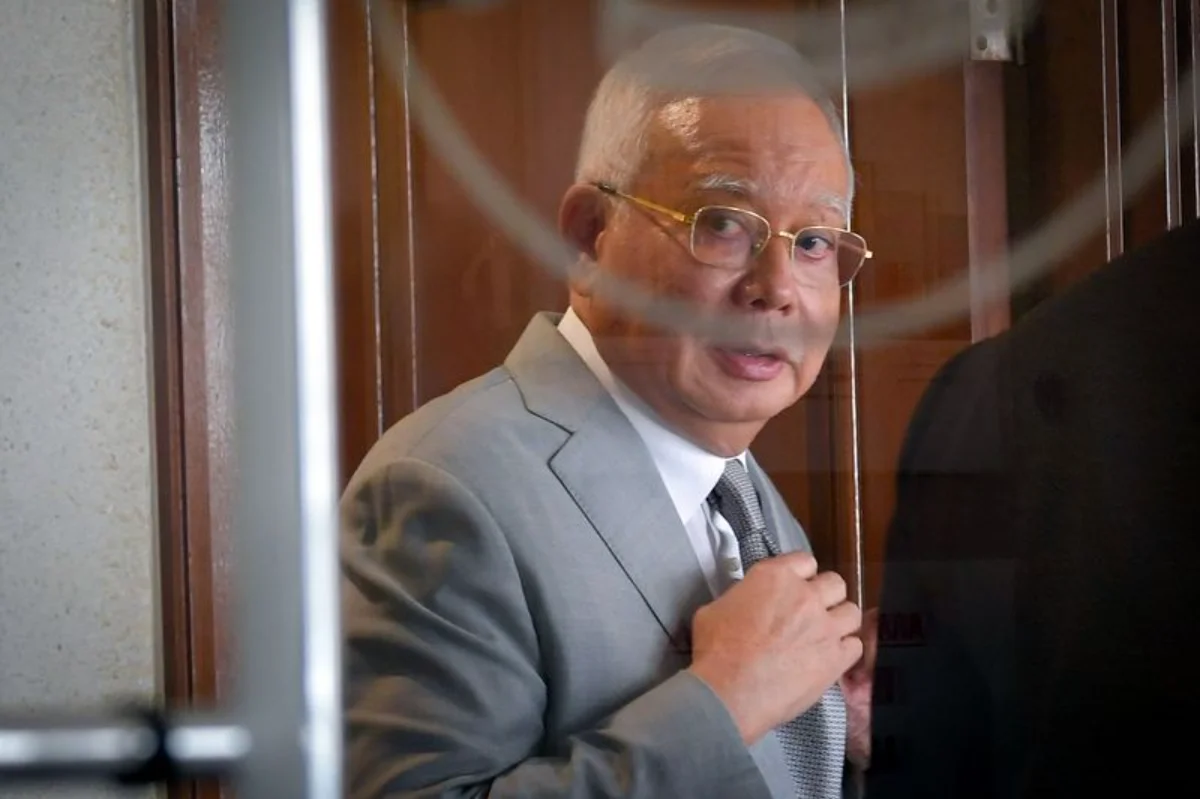
https://thesun.my/wp-content/uploads/2025/11/KL12_29052024__NAJIB_1MDB.webp

  • Datuk Seri Najib Razak has been sentenced to 15 years in jail and fined RM11.4 billion in the 1Malaysia Development Bhd (1MDB) case.
  • Justice Collin Lawrence Sequerah considered mitigating and aggravating factors, public interest, and deterrence.
  • Najib received 15 years in jail for each of the four abuse of power charges, with a fine equivalent to 40 years in jail in default.
  • For the 21 money laundering charges, Najib was sentenced to five years in jail each, with no additional fine.
  • All jail sentences are ordered to run concurrently.
  • The jail time will commence after Najib completes his six-year sentence in the SRC International case, expected on August 23, 2028.
  • The court ordered the return of Najib's bail sum, as the prosecution did not object.
  • Najib's defence team did not apply for a stay of execution but reserved the liberty to do so.
  • The High Court found Najib guilty on all 25 charges in the RM2.3 billion case.
  • The defence's argument of Arab donations was rejected by the High Court.

Reference(s)

  1. https://www.thestar.com.my/news/nation/2025/12/26/1mdb-verdict-najib-get-15-years039-jail-plus-rm114bil-fine
  2. https://kagi.com/summarizer?target_language=&summary=takeaway&url=https%3A%2F%2Fwww.thestar.com.my%2Fnews%2Fnation%2F2025%2F12%2F26%2F1mdb-verdict-najib-get-15-years039-jail-plus-rm114bil-fine

Kalvin Carefour Johnny ✯

https://s.yimg.com/ny/api/res/1.2/6NssNvasV39UMJwlLVxvWg--/YXBwaWQ9aGlnaGxhbmRlcjt3PTEyNDI7aD02OTk7Y2Y9d2VicA--/https://media.zenfs.com/en/techcrunch_350/b1b36e2303d6554d4e6d07506e254f16

  • The world needs social sovereignty, which means institutions have autonomy and control over their digital infrastructure, data, and services.
  • Public institutions should use open platforms like Mastodon for communication, rather than corporate-owned social media.
  • Corporate social media platforms use algorithms to control content and force institutions to pay for advertising, limiting public discourse.
  • Elon Musk's actions on X, such as blocking the European Commission from advertising, highlight the dangers of centralized control.
  • Mastodon offers a chronological timeline, ensuring institutions can reach their audiences without algorithmic manipulation.
  • Mastodon allows users to verify themselves by linking social profiles to official websites, promoting transparency and trust.
  • The European Commission is leading by example by using a Mastodon instance (ec.social-network.europa.eu) for direct communication with citizens.
  • The fediverse, including Mastodon, offers a way forward free from ads and manipulative algorithms, prioritizing user sovereignty.
  • Institutions that rely on advertising budgets risk having their narratives overshadowed by those willing to pay, silencing important voices.
  • Individuals can encourage their governments to adopt open social media networks by contacting local representatives.

Reference(s)

  1. https://blog.joinmastodon.org/2025/12/the-world-needs-social-sovereignty
  2. https://kagi.com/summarizer?target_language=&summary=takeaway&url=https%3A%2F%2Fblog.joinmastodon.org%2F2025%2F12%2Fthe-world-needs-social-sovereignty%2F

Kalvin Carefour Johnny ✯

https://p0.piqsels.com/preview/472/650/436/audit-report-verification-magnifier.jpg

  • Age-verification laws, while intended to protect minors, can disproportionately harm adults without identification, leading to exclusion from online services.
  • Biometric and AI-based age-estimation systems exhibit racial bias, performing less accurately for people of color and potentially blocking their access to online spaces.
  • Individuals with disabilities face significant barriers due to facial recognition system inaccuracies and liveness detection failures, further compounded by lower rates of current identification.
  • Transgender and non-binary individuals are put at risk, facing the impossible choice between revealing sensitive personal information or losing access to online platforms.
  • Age verification mandates erode online anonymity, which is crucial for the safety of domestic abuse survivors, journalists, activists, and whistleblowers.
  • Young people may be denied access to essential information regarding health, sexuality, and gender due to age verification laws, hindering their education and self-discovery.
  • LGBTQ+ youth, especially those without supportive families, rely on the internet as a lifeline, and age verification systems that require parental consent can sever these vital connections.
  • Youth in foster care systems are particularly vulnerable and can be excluded from online platforms if parental consent is a requirement and no legal guardian is available.
  • Mandatory age verification systems create significant privacy risks by requiring users to submit sensitive personal data to third-party companies, increasing the likelihood of data breaches and identity theft.
  • Age verification systems can infringe upon free speech rights by being over-inclusive (blocking adults) and under-inclusive (failing to block minors), thus restricting lawful speech.

Reference(s)

  1. https://www.techdirt.com/2025/12/24/10-not-so-hidden-dangers-of-age-verification
  2. https://kagi.com/summarizer?target_language=&summary=takeaway&url=https%3A%2F%2Fwww.techdirt.com%2F2025%2F12%2F24%2F10-not-so-hidden-dangers-of-age-verification%2F

Kalvin Carefour Johnny ✯

https://www.cato.org/sites/cato.org/files/styles/pubs_2x/public/2025-02/Musk%20.jpg?itok=nx-ZJK1I

  • X has banned the European Commission from advertising on its platform following a €120 million fine.
  • The fine was issued for the platform's blue tick system, which the EU regulator deemed 'deceptive' due to a lack of meaningful user verification.
  • The EU regulator cited concerns about scams, impersonation, and manipulation by malicious actors as consequences of the deceptive system.
  • X also faces scrutiny for failing to provide transparency around its adverts and denying researchers access to public data.
  • Elon Musk reacted to the fine by stating the EU 'should be abolished' and retweeted a comparison of the EU to fascism.
  • A senior X executive accused the European Commission of exploiting a loophole in the advertising system to promote its post about the fine.
  • The European Commission stated it uses social media platforms in good faith and expects tools to comply with terms and conditions.
  • This dispute follows previous disagreements between X and global regulators, including actions in Brazil and Australia.
  • The fine is the first issued under the EU's Digital Services Act.
  • US officials, including Marco Rubio and the FCC, have accused the EU regulator of attacking and censoring US firms.

Reference(s)

  1. https://www.bbc.com/news/articles/c0589g0dqq7o
  2. https://kagi.com/summarizer?target_language=&summary=takeaway&url=https%3A%2F%2Fwww.bbc.com%2Fnews%2Farticles%2Fc0589g0dqq7o

Kalvin Carefour Johnny ✯

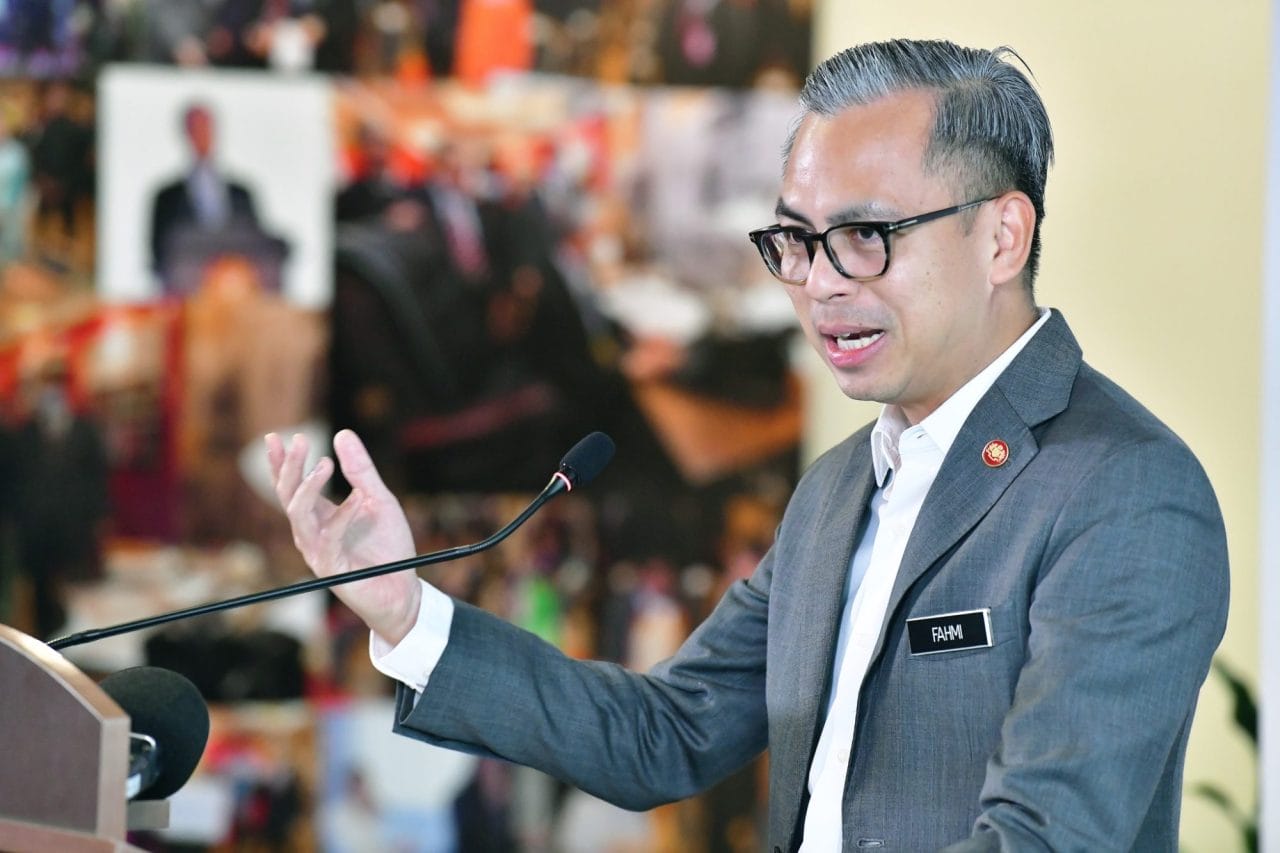
Encik Fahmi, the ministry of communication, they said

Are we moving forward towards a sovereign digital nation, or are we regressing to the Stone Age where communication is done via smoke signals and carrier pigeons?

Recently, the public discourse regarding the government’s proposal—specifically the narrative driven by the Minister of Communications, Mr Fahmi Fadzil—to ban social media usage for those under 16 years old has become increasingly critical. The justification often revolves around safety: protecting the youth from sexual predators, cyberbullying, and negative influences.

However, as an IT student and a digital rights activist, I do not see this as a safety measure. I see it as a “shortcut” to mask a systemic failure in managing Malaysia's internet ecosystem.

Web 1.0 vs Web 2.0: Failing to Understand Digital Evolution

To understand why this proposed ban is problematic, we need to return to the fundamentals of internet technology that I learnt in my lectures.

The authorities seem to be stuck in a Web 1.0 mentality. Web 1.0 was the “read-only” era, where the internet functioned like a television or a newspaper—information was sent one-way from the provider to the user. If you didn't like what was on, you turned off the TV. Simple.

But we are now living in the era of Web 2.0 and moving towards Web 3.0. This is the “read-write” web. It is a two-way street. Social media is not just a place to watch dance videos; it is critical infrastructure for communication, collaboration, and identity building.

For teenagers aged 13 to 16 today, social media is where they:

  • Build portfolios for art or coding.
  • Learn about the outside world through educational content.
  • Connect with niche communities that share their specific interests.

Cutting off this access via a “total ban” means we are severing their lifeline to learning and social development. We are forcing them to be passive consumers (Web 1.0) in a world that demands active interaction.

Blaming the Victim to Cover Systemic Potholes

The narrative often peddled is: “Social media is a dangerous place, so let’s not let the kids in.”

This is a classic form of victim-blaming. If a road is dangerous because there are many drunk drivers and potholes, do we ban pedestrians from using the road? No. We catch the drunk drivers and we resurface the road.

In the context of the Malaysian cyber landscape, those “potholes” are systemic failures:

  1. Weak Enforcement: Why are sexual predators and scammers still roaming free on these platforms?
  2. Lack of Digital Literacy Education: Why do we prefer fear-mongering over teaching users how to identify danger?
  3. Fragile Data Sovereignty: Why is our personal data so easily leaked that scammers can contact us with ease?

The act of censoring an entire demographic (under-16s) is an easy way for the government to wash its hands of the problem. It gives the illusion that “something is being done,” whilst the root causes—cybercrime and enforcement failure—remain completely untouched.

A Neurodiverse Perspective: The Internet as a Lifeline

One aspect often overlooked by policymakers is the neurodiverse community. As an autistic person, I understand that face-to-face communication can sometimes be incredibly draining and fraught with invisible social hurdles.

For many autistic teenagers, the internet and social media are spaces where the playing field is levelled. Here, we can communicate without the pressure of maintaining eye contact or decoding complex body language. We can find communities that accept us as we are.

Banning social media for this group is not just “reducing screen time”; it is a form of social isolation. It shuts the door on the only way some of us can comfortably interact with the outside world. Has Mr Fahmi considered this psychological impact, or is this decision made entirely based on a neurotypical framework?

The “Creep” Label and Ad Hominem Attacks

What is even more disheartening is that when we try to debate this issue rationally—discussing digital rights, freedom of speech, and system failures—we are often attacked personally.

I myself have been accused of various unsavoury titles, such as being a “creep,” simply for defending a free internet. When intellectual arguments are met with moral accusations (“Do you not care about children?”, “Are you some kind of predator?”), it signals the death of intellectual discourse.

We must stop using emotion to draft technical legislation. We need to look at data and reality. Criminals will not stop because of an age-limit law; they will find other ways. The only ones who will be affected are the law-abiding citizens.

What is the Real Solution?

We cannot go back to communicating via smoke signals. We need to move forward with Digital Sovereignty and Education.

  1. Empower Literacy, Not Censorship: Teach the youth (and parents!) about data privacy, how to identify grooming, and how to manage their digital footprint. Make it a compulsory subject in schools, not just a once-a-year talk.
  2. Safer Technology (Humane-Tech): Encourage the use of platforms that respect privacy and do not manipulate algorithms for addiction. As a proponent of self-hosting, I believe the future lies in decentralised platforms where communities can moderate each other, not in giant platforms that only care about profit.
  3. Platform Responsibility & Enforcement: Force giant tech platforms to cooperate with the police to catch the actual criminals, rather than just banning user accounts.

Conclusion

Banning social media for those under 16 might satisfy certain politicians who want a quick fix on paper. But in reality, it is a regressive step that will hinder the potential of our younger generation.

We should not sacrifice democracy and the voice of the rakyat simply to blindly copy what other countries are doing. Malaysia has the potential to build an internet model that is civilised, safe, and free—but it starts by admitting that the real problem lies with the system, not the users.

Do not switch off our youth's digital light just because we are too lazy to fix the switch.


Kalvin Carefour Johnny ✯

Encik Fahmi menteri komunikasi, mereka kata

Adakah kita sedang bergerak ke hadapan menuju negara digital yang berdaulat, atau kita sedang mengundur ke zaman batu di mana komunikasi hanya dilakukan melalui isyarat asap dan burung merpati?

Kebelakangan ini, wacana mengenai cadangan kerajaan—khususnya naratif yang dibawa oleh Menteri Komunikasi, Encik Fahmi Fadzil—untuk mengharamkan penggunaan media sosial bagi mereka yang berusia di bawah 16 tahun semakin meruncing. Alasannya sering kali berkisar tentang keselamatan: untuk melindungi anak muda daripada pemangsa seksual, buli siber, dan pengaruh buruk.

Namun, sebagai seorang pelajar IT dan aktivis hak digital, saya melihat ini bukan sebagai langkah keselamatan. Saya melihatnya sebagai satu tindakan “jalan pintas” untuk menutup kegagalan sistemik dalam menguruskan ekosistem internet di Malaysia.

Web 1.0 vs Web 2.0: Kegagalan Memahami Evolusi Digital

Untuk memahami mengapa cadangan pengharaman ini bermasalah, kita perlu kembali kepada asas teknologi internet yang saya pelajari dalam kuliah.

Pihak berwajib nampaknya masih tersekat dalam mentaliti Web 1.0. Web 1.0 adalah era “baca sahaja” (read-only), di mana internet berfungsi seperti televisyen atau surat khabar—maklumat dihantar sehala dari penyedia kepada pengguna. Jika anda tidak suka apa yang disiarkan, anda tutup TV itu. Mudah.

Tetapi kita kini hidup dalam era Web 2.0 dan sedang bergerak ke Web 3.0. Ini adalah web “baca dan tulis” (read-write). Ia adalah jalan dua hala. Media sosial bukan sekadar tempat menonton video tarian; ia adalah infrastruktur kritikal untuk komunikasi, kolaborasi, dan pembangunan identiti.

Bagi remaja berumur 13 hingga 16 tahun hari ini, media sosial adalah tempat mereka:

  • Membina portfolio seni atau koding.
  • Belajar tentang dunia luar melalui content pendidikan.
  • Berhubung dengan komuniti yang mempunyai minat yang sama (niche communities).

Memotong akses ini secara total (“total ban”) bermakna kita memotong talian hayat pembelajaran dan perkembangan sosial mereka. Kita memaksa mereka menjadi pengguna pasif (Web 1.0) dalam dunia yang menuntut interaksi aktif.

Menyalahkan Mangsa untuk Menutup Lubang Sistem

Naratif yang sering dijaja ialah: “Media sosial tempat yang bahaya, jadi jangan bagi budak masuk.”

Ini adalah satu bentuk victim-blaming (menyalahkan mangsa) yang klasik. Jika jalan raya berbahaya kerana banyak pemandu mabuk dan jalan berlubang, adakah kita mengharamkan pejalan kaki daripada menggunakan jalan raya? Tidak. Kita tangkap pemandu mabuk dan kita turap jalan tersebut.

Dalam konteks siber Malaysia, “jalan berlubang” itu adalah kegagalan sistemik:

  1. Penguatkuasaan yang Lemah: Mengapa pemangsa seksual dan scammer masih bebas berkeliaran di platform?
  2. Kurangnya Pendidikan Literasi Digital: Mengapa kita lebih suka menakut-nakutkan pengguna daripada mengajar mereka cara mengenal pasti bahaya?
  3. Kedaulatan Data yang Rapuh: Mengapa data kita mudah bocor sehingga scammer boleh menghubungi kita dengan mudah?

Tindakan menapis atau censor keseluruhan demografik (bawah 16 tahun) adalah cara mudah untuk kerajaan cuci tangan. Ia memberi ilusi bahawa “sesuatu sedang dilakukan”, sedangkan punca utama masalah—iaitu jenayah siber dan kegagalan penguatkuasaan—tidak disentuh sama sekali.

Perspektif Neurodiversiti: Internet Sebagai Talian Hayat

Satu aspek yang sering dilupakan oleh pembuat dasar ialah golongan neurodiversiti. Sebagai seorang autistik, saya memahami bahawa komunikasi bersemuka kadangkala boleh menjadi sangat memenatkan (draining) dan penuh dengan halangan sosial yang tidak ketara.

Bagi ramai remaja autistik, internet dan media sosial adalah ruang di mana padang permainan menjadi rata. Di sini, kami boleh berkomunikasi tanpa tekanan “eye contact” atau membaca isyarat badan yang rumit. Kami boleh mencari komuniti yang menerima kami seadanya.

Mengharamkan media sosial bagi golongan ini bukan sekadar “mengurangkan screen time”; ia adalah satu bentuk pengasingan sosial. Ia menutup pintu kepada satu-satunya cara sesetengah daripada kami berinteraksi dengan dunia luar dengan selesa. Adakah Encik Fahmi memikirkan impak psikologi ini, atau adakah keputusan ini dibuat semata-mata berdasarkan kerangka fikir orang neurotipikal?

Label “Creep” dan Serangan Ad Hominem

Apa yang lebih menyedihkan, apabila kita cuba membahaskan isu ini secara rasional—tentang hak digital, tentang kebebasan bersuara, dan tentang kegagalan sistem—kita sering diserang secara peribadi.

Saya sendiri pernah dituduh dengan pelbagai gelaran buruk semata-mata kerana mempertahankan internet yang bebas. Apabila hujah intelektual dibalas dengan tuduhan moral (“awak tak sayang budak-budak ke?”, “awak ni creep ke?“), ia menandakan kematian wacana intelektual.

Kita perlu berhenti menggunakan emosi untuk menggubal undang-undang teknikal. Kita perlu melihat data dan realiti. Penjenayah tidak akan berhenti kerana undang-undang had umur; mereka akan mencari jalan lain. Yang akan terkesan hanyalah rakyat biasa yang patuh undang-undang.

Apa Penyelesaian Sebenar?

Kita tidak boleh kembali berkomunikasi menggunakan isyarat asap. Kita perlu bergerak ke hadapan dengan Kedaulatan Digital dan Pendidikan.

  1. Perkasakan Literasi, Bukan Penapisan: Ajar anak muda (dan ibu bapa!) tentang privasi data, cara mengenal pasti grooming, dan cara menguruskan jejak digital. Jadikan ia subjek wajib di sekolah, bukan sekadar ceramah sekali setahun.
  2. Teknologi yang Lebih Selamat (Humane-Tech): Galakkan penggunaan platform yang menghormati privasi dan tidak memanipulasi algoritma untuk ketagihan. Sebagai penyokong self-hosting, saya percaya masa depan adalah pada platform teragih (decentralised) di mana komuniti boleh memantau satu sama lain, bukan pada platform gergasi yang hanya mahukan keuntungan.
  3. Tanggungjawab Platform & Penguatkuasaan: Paksa platform gergasi untuk bekerjasama dengan polis dalam menangkap penjenayah sebenar, bukan sekadar menutup akaun pengguna.

Kesimpulan

Mengharamkan media sosial untuk bawah 16 tahun mungkin memuaskan hati segelintir pihak politik yang mahukan penyelesaian pantas di atas kertas. Tetapi di alam nyata, ia adalah langkah mundur yang akan merugikan potensi generasi muda kita.

Kita tidak sepatutnya mengorbankan demokrasi dan suara rakyat demi mengikut telunjuk “negara orang” bulat-bulat. Malaysia mempunyai potensi untuk membina model internet yang bertamadun, selamat, dan bebas—tetapi ia bermula dengan mengakui bahawa masalah sebenar ada pada sistem, bukan pada pengguna.

Jangan padamkan lampu digital anak muda kita hanya kerana kita malas membaiki suisnya.


Kalvin Carefour Johnny ✯

Enter your email to subscribe to updates.